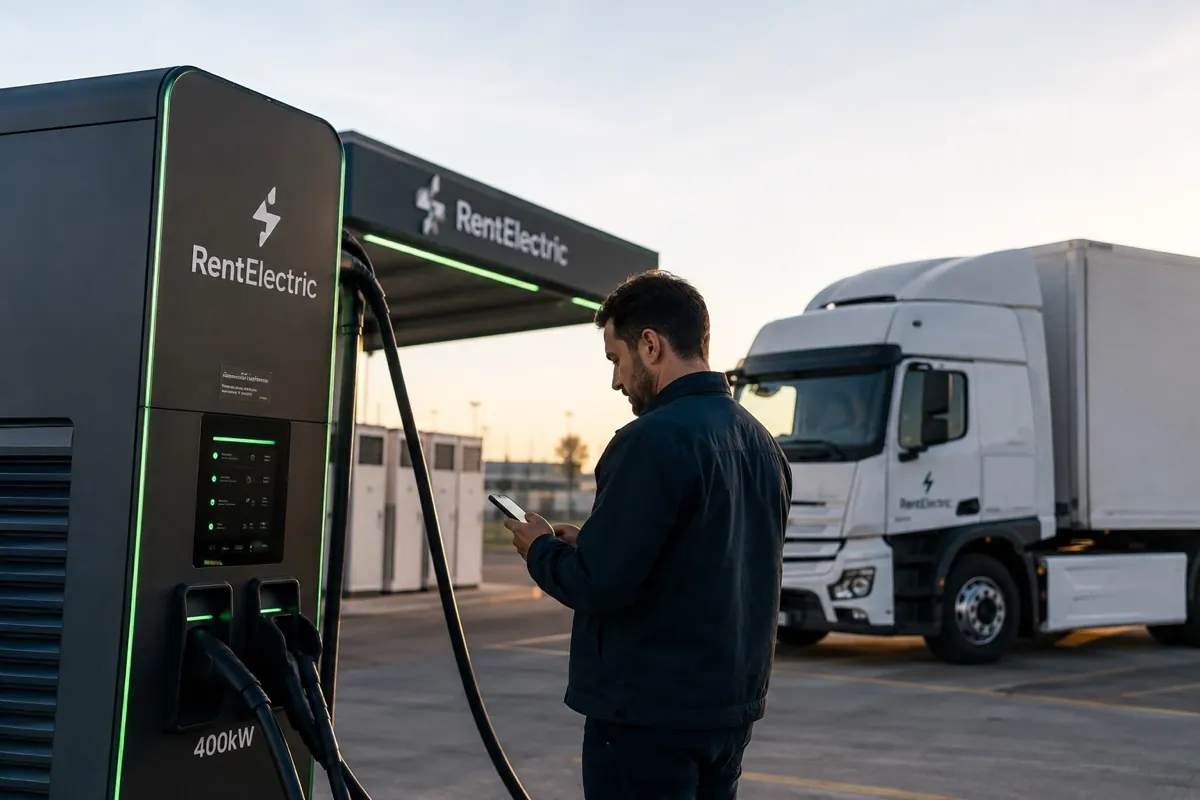
We tell how electric mobility stops being a promise and becomes infrastructure that works. No inflated figures, no “coming soon”: verifiable data, hub by hub, fleet by fleet.

Four projects awarded by IDAE in Mercazaragoza, Oropesa, Monzón and Alfarràs add DC charging infrastructure to Spain's transport corridors.
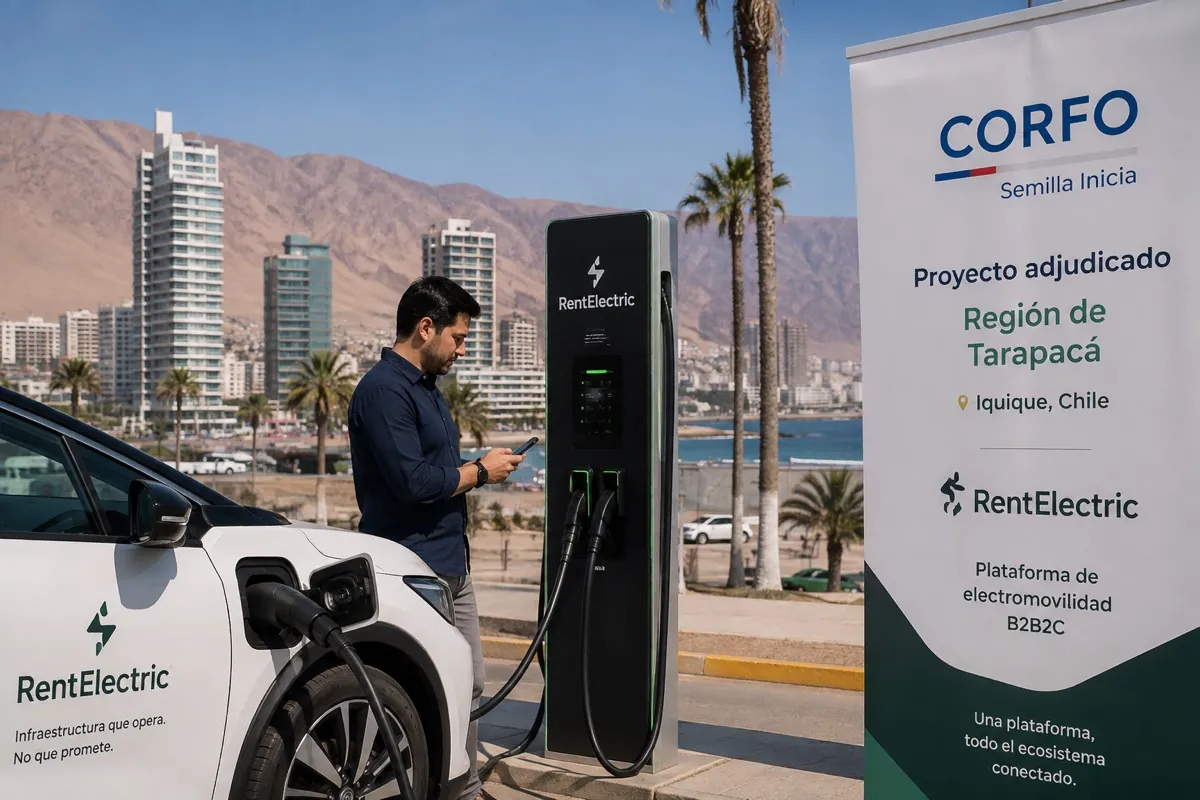
Chile backs RentElectric's B2B2C electric mobility platform. The project starts in the Tarapacá region, with electrical compliance of buildings as the first entry point.
One in four charging points already paid for in Spain is still waiting for grid connection approval — while one operator gets around it with stationary batteries. Why we think it matters.
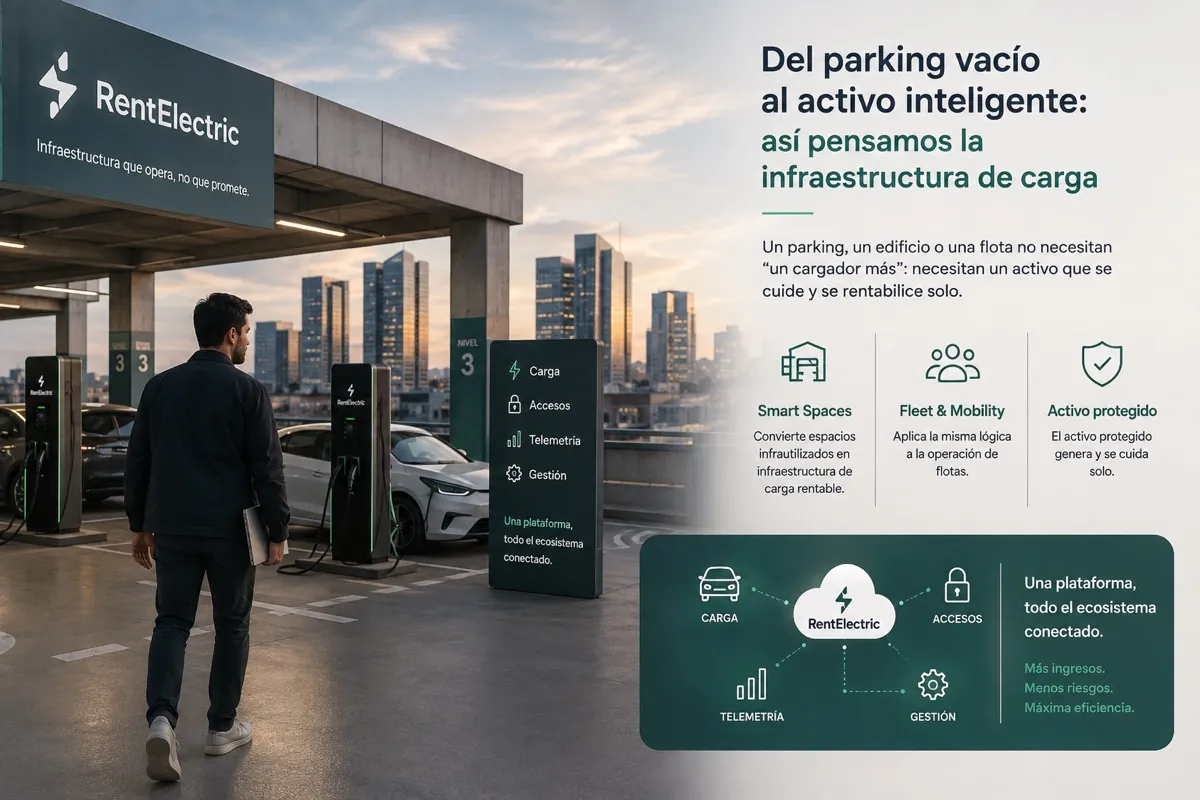
Before talking about chargers, we always ask the same three questions. That is how we decide whether an asset is ready to generate revenue.
We believe in infrastructure that operates, not infrastructure that promises.
That is the criterion we use to choose every piece we publish here.
Book a demo


The four stations will feature state-of-the-art DC chargers combined with battery storage (BESS), designed to serve light vehicles and, at a later stage, heavy transport on key logistics corridors.
The deployment rests on the same principle that guides the rest of RentElectric's infrastructure: “Infrastructure that operates, not that promises.” Each station is designed to be operated remotely from day one, with OCPP monitoring and dynamic power management, so that charging is available with the reliability a transport corridor demands.
The project is being developed with an engineering team specialised in high-power charging infrastructure, and is part of RentElectric's commitment to electrifying the country's main transport routes.

The “B2B2C Electric Mobility Platform” project (code 26INI-315721) was awarded on 1 July 2026, with execution until April 2027, and is sponsored by GEDES Ltda. as sponsoring entity before CORFO.
Unlike other markets, RentElectric's entry into Chile starts from a very specific driver: the mandatory electrical compliance that regulations already require of buildings and commercial spaces. This makes Facility Management — the professional management of buildings, shopping centres and private spaces — RentElectric's natural entry point into the Chilean market, even before electric mobility itself.
On the same technology base, RentElectric also works with private car parks and corporate fleets in the region, following the same principle it applies in its other markets: “one platform, the whole ecosystem connected” — access control, charging and fleet management on the same infrastructure.
This recognition from CORFO is a further step in RentElectric's expansion outside Spain, and confirms public institutions' interest in electrification models that solve regulatory compliance and energy efficiency at the same time.
Spain's charging network is growing fast: 56,933 public points in operation at the end of June 2026, 13.9% more than at the end of 2025 (AEDIVE/ANFAC data). But the growth hides a well-known bottleneck: about a quarter of the points already installed and paid for are still not switched on, waiting for permission to connect to the electricity grid.
This week, the Denza brand (BYD) announced a network of 300 ultra-fast charging stations in Spain (350 across Iberia) before 2027, with a technical twist: each station includes stationary batteries that draw energy from the grid gradually and release it at the peaks of a charging session, thereby avoiding the same grid-connection procedure that is holding back much of the sector.
It is the same principle — battery storage (BESS) built into the station itself — that we apply in our ultra-fast charging projects in Spain (see MOVES Corredores). It is no coincidence: when the grid is the bottleneck, the battery at the station stops being an extra and becomes the piece that makes the project viable.

1. Who uses the space today and how much does it turn over? A car park with fixed subscribers, a high-turnover shopping-centre car park and a corporate fleet parked overnight have completely different usage patterns — and that determines how many charging points make sense and at what power.
2. What contracted power does the building have today? Often there is no need to increase it: with dynamic load management the existing power can be shared across several points without touching the electricity contract. This question usually dispels, in five minutes, the most common fear: “this will force me into major works”.
3. Who owns the asset and who decides? A single owner is not the same as an owners' association or a company managing the asset on behalf of a third party. The answer changes the approval process, not the technical feasibility.
With these three answers we can already give a first estimate of what the asset can earn — with no prior visit and no commitment.


The platform that makes business electric mobility safe and profitable. Spain · Chile · Peru.